
For Our Neighbors: The Conservation Community in Los Angeles
Presentation Authors: Laleña Vellanoweth, Jen Kim and Kiernan Graves
Blogpost Summary by Sarah Ellison, LACMA Conservation Technician
The Los Angeles fires of 2025 threw our city into a whirlwind of fire, smoke, and ash. In seconds, communities lost homes, loved ones, and treasured belongings. Our familiar blue skies and palm-lined streets disappeared behind opaque orange and red smoke. Nearly everyone knew someone personally affected. Yet what defines Los Angeles is how quickly we show up for one another.
Presentation Authors: Laleña Vellanoweth, Jen Kim, and Kiernan Graves
Blogpost Summary by Sarah Ellison, LACMA Conservation Technician
The Los Angeles fires of 2025 threw our city into a whirlwind of fire, smoke, and ash. In seconds, communities lost homes, loved ones, and treasured belongings. Our familiar blue skies and palm-lined streets disappeared behind opaque orange and red smoke. Nearly everyone knew someone personally affected. Yet what defines Los Angeles is how quickly we show up for one another.
That spirit led to the formation of Art Recovery Los Angeles (ARLA), created to support residents who were able to save cherished belongings and to teach them how to clean and preserve those items at home. In a field often seen as niche and inaccessible, ARLA sought to demystify conservation, showing that basic preservation practices used in museums and private labs can be done with minimal guidance and supplies. What began with twenty volunteer conservators became a powerful mutual aid effort, removing cost barriers and reframing conservation as care.
ARLA hosted four large community clinics at The Armory Center for the Arts, The Geffen Contemporary at MOCA, The Getty Center, and The Altadena Library, helping over 400 residents. Each site included stations for paper, photographs, objects, paintings, and textiles. Guests signed up for time slots, received intake slips for each item, and met one-on-one with conservators. After treatment, pieces were photographed, safe storage boxes were created, and 230 cleaning kits were distributed for continued care at home.
The clinics offered more than preservation. Conservators listened to stories behind smoke-stained photographs, damaged heirlooms, and rescued keepsakes. They held space for grief, bore witness to loss, and offered steady reassurance. In teaching people how to care for what remained, ARLA helped restore a sense of connection and healing alongside the individual prized possessions themselves.
Trial by Fire: Reflections on Disaster Relief in the Aftermath of the 2025 Los Angeles Fires as an Emerging Conservation Professional
Presentation authors: Malaika Abramson
Blogpost Summary by Sarah Ellison, LACMA Conservation Technician
Malaika Abramson generously shared her personal conservation and preservation experience during the 2025 Los Angeles fires. She began with a moment none of us will forget, the morning hours of January 7, 2025, it was just the beginning . At that detail alone, the room seemed to lose its breath. We were instantly transported back to that morning.
Presentation authors: Malaika Abramson
Blogpost Summary by Sarah Ellison, LACMA Conservation Technician
Malaika Abramson generously shared her personal conservation and preservation experience during the 2025 Los Angeles fires. She began with a moment none of us will forget, the morning hours of January 7, 2025, it was just the beginning . At that detail alone, the room seemed to lose its breath. We were instantly transported back to that morning.
Abramson reflected on volunteering at fire relief clinics with Art Recovery Los Angeles and the private organization LA Art Labs. Her memories centered not only on the objects she treated, but on the people behind them. She recalled the emotional weight of helping a guest gently clean a soot-covered vase and a menorah, objects carrying history, faith, and survival. Her reflections revealed deep empathy and a commitment to meeting community members where they were at.
She addressed how intimidating conservation can feel to those unfamiliar with the field. By replacing technical jargon with accessible language, she worked to make the clinics welcoming. Abramson spoke candidly about the emotional and physical toll of working in fire-affected areas, wearing full Tyvek suits and protective gear while handling ash and debris. Even then, she found ways to lighten the heaviness of the work.
One of her guiding intentions she shared was to “keep art safe for people and connectwith.” The arts, whether drawing, dance, music, or sculpture is how many of us heal. On January7, 2025, for many of us with just a few hours into our work days, in a city of over three million,we became one, caring for both our art and each other.
Volunteer Perspective on Fire Recovery Clinic Experiences
Presentation authors: Ronel Namde and Elyse Driscoll
Blogpost Summary by Joelle Yang
In the aftermath of the Palisades, Eaton, and Altadena fires, there was no end in sight to the havoc that was wrecked. The task of recovery seemed overwhelming and insurmountable but nevertheless, LA conservators were quick to volunteer their knowledge and care to the objects that could be saved from the fires. Community conservation clinics were organized by Art Recovery LA (ARLA) and the LA County Department of Arts & Culture to assist anyone and everyone who had objects that sustained damage from the fires. The clinics offered free consultations, treatment, and housing for their clients’ objects. Having participated in all four of the clinics organized, photograph conservator Ronel Namde, and paper conservator Elyse Driscoll, shared their perspectives on how these conservation clinics could mend both an object and a community.
Presentation authors: Ronel Namde and Elyse Driscoll
Blogpost Summary by Joelle Yang
In the aftermath of the Palisades, Eaton, and Altadena fires, there was no end in sight to the havoc that was wrecked. The task of recovery seemed overwhelming and insurmountable but nevertheless, LA conservators were quick to volunteer their knowledge and care to the objects that could be saved from the fires. Community conservation clinics were organized by Art Recovery LA (ARLA) and the LA County Department of Arts & Culture to assist anyone and everyone who had objects that sustained damage from the fires. The clinics offered free consultations, treatment, and housing for their clients’ objects. Having participated in all four of the clinics organized, photograph conservator Ronel Namde, and paper conservator Elyse Driscoll, shared their perspectives on how these conservation clinics could mend both an object and a community.
Namde and Driscoll were equipped for the task with previous experiences in disaster response and community outreach. However, it didn’t make the heavy burden of loss associated with these objects any easier to carry. An object that once brought a client’s memories to life now had a painful reminder of the fires from the damage it endured. With how significant these objects were to the clients, and how harrowing the events that brought them here were, Namde and Driscoll emphasized the importance of building trust. They explained how walking clients through the entire treatment process helped ease the worry and stress of the situation to make the experience as pleasant as it could be. Namde and Driscoll also explained how having a high standard of care ensured that clients knew they were in good hands. When a client saw professionalism and reverence towards their objects, it helped them understand that the objects were just as precious to conservators as they were to them.
Although the technical aspects of the work are critical, Namde and Driscoll stressed that the most paramount goal in remediation was supporting and connecting with a community. While conserving an object would fix the damage, providing a space for trust and shared stories is what would truly heal a community.
Smoke Remediation of Historic Family Photographs After the Eaton Fire: Treatment, Collaboration, and Community Impact
In January 2025, the Eaton fire had taken with it buildings that housed lifetimes of memories. While their house were no longer there, the remnants of a home could be parsed by a client of M Conservation, who was able to save a collection of photographs to be conserved. The collection included negatives and photos from the Ottoman Empire dating back to 1913,
the only surviving family portrait of relatives who perished, two surviving sisters, and images of the family in Beirut during the 1940s and 1950s. Having lost a previous home to a different fire, and not receiving adequate compensation from their insurance company, Madalyn Meehan and Lillian Liu of M conservation set out to conserve these photos and provide some reprieve for their client. This set forth a truly community oriented project that would support a Los Angeles resident, collaborate with fellow conservators, and enrich the education of a budding conservation professional.
Presentation authors: Madalyn Meehan and Lillian Liu
Blogpost Summary by Joelle Yang
In January 2025, the Eaton fire had taken with it buildings that housed lifetimes of memories. While their house were no longer there, the remnants of a home could be parsed by a client of M Conservation, who was able to save a collection of photographs to be conserved. The collection included negatives and photos from the Ottoman Empire dating back to 1913,
the only surviving family portrait of relatives who perished, two surviving sisters, and images of the family in Beirut during the 1940s and 1950s. Having lost a previous home to a different fire, and not receiving adequate compensation from their insurance company, Madalyn Meehan and Lillian Liu of M conservation set out to conserve these photos and provide some reprieve for their client. This set forth a truly community oriented project that would support a Los Angeles resident, collaborate with fellow conservators, and enrich the education of a budding conservation professional.
With much to do and learn from these photos, the collaborative process started early on with photograph conservator Ronel Namde who was able to answer questions and demo treatments. With budget being of concern, Meehan was able to help offset the client’s costs by bringing on Liu as an intern which provided Liu with a project filled with new techniques. Together, Meehan, Liu, and Namde devised and carried out a plan which included cataloguing and documenting the photos, dry cleaning with soot and makeup sponges, treating with 50% ethyl alcohol and water, humidification, stabilization with washi paper, and storage.
The project concluded with the photos reaching a state that would allow them to be handled safely and have long-term stability. The success of this project brought about an opportunity to form new bonds and an exchange of knowledge in the conservation community for both practicing and inspiring conservators. With this connection, a client who’d experienced so much loss already, was able to have a collection of great cultural and historical significance brought back to them.
The Eaton Fire’s Impact on The Huntington
Presentation authors: Christina O'Connell and Melissa Mariano
Blogpost Summary by Jennifer Ly
Christina O’Connell and Melissa Mariano shared the continued recovery work at The Huntington following the Eaton Fire. The fire began approximately 4.5 miles from the campus, with damage exacerbated by window and doorway gaps. Due to a window latch failure from the Santa Ana winds, the Huntington Art Gallery experienced the most damage from debris and particulates.
Presentation authors: Christina O'Connell and Melissa Mariano
Blogpost Summary by Jennifer Ly
Christina O’Connell and Melissa Mariano shared the continued recovery work at The Huntington following the Eaton Fire. The fire began approximately 4.5 miles from the campus, with damage exacerbated by window and doorway gaps. Due to a window latch failure from the Santa Ana winds, the Huntington Art Gallery experienced the most damage from debris and particulates.
O’Connell and Mariano described first focusing their efforts on collections and gallery spaces by dust vacuuming and cleaning works with cosmetic sponges. They soon implemented recovery protocols using PVOH borax gel to pick up particulate matter and collecting samples for IH testing. Samples from metals were wiped with ICP-MS, samples surface-lifted by tape were analyzed for particulates though direct microscopy, and vacuum cassettes collected possible combustion products from textiles. The IH testing found initial cleaning efforts had greatly reduced high concentrations of fire residues, although some levels had accumulated unevenly on materials and in different buildings, so more cleaning is necessary moving forward.
Several challenges appeared, including difficulty dusting cracked crevices with particulates stuck in deep, an uptick in moth activity that led to tapestries requiring anoxia treatment, and elevated levels of zinc they are still attempting to interpret. As The Huntington remains in active recovery, the next steps involve testing collections to both understand the contaminants and evaluate the success of chosen cleaning methods, and improving window and door seals in the Huntington Art Gallery.
O’Connell and Mariano concluded the talk by advising other institutions to meticulously document photographic and written records in case of insurance needs. They also noted how physically and emotionally draining recovery efforts can be, and therefore emphasized the importance of taking breaks. Finally, they expressed gratitude for the incredible assistance of the conservation community in sharing informational resources and support through recovery clinics.
Tape, Boots and Fire Extinguishers: Protecting the Getty Villa from the Palisades Fire
Presentation authors: Les Borsay
Blogpost Summary by Kimi Taira, UCLA Library
Les Borsay, Senior Emergency Planning Specialist for the J. Paul Getty Trust, shared details of the Getty team’s response to the Palisades Fire at the Getty Villa. Through a combination of planning, luck, and teamwork, staff coordinated a successful defense alongside LAFD, resulting to limited damage of the property and collections.
Presentation authors: Les Borsay
Blogpost Summary by Kimi Taira, UCLA Library
Les Borsay, Senior Emergency Planning Specialist for the J. Paul Getty Trust, shared details of the Getty team’s response to the Palisades Fire at the Getty Villa. Through a combination of planning, luck, and teamwork, staff coordinated a successful defense alongside LAFD, resulting to limited damage of the property and collections.
Prior to the start of the Palisades Fire, the Getty’s Emergency Operating Center (EOC) was already on alert with the fire weather watch/high wind warnings and considering response scenarios. On the day of the fire, Borsay was already onsite for a routine site inspection, and the galleries were already closed to the general public which allowed the team to minimize the evacuation effort. Procedures immediately moved forward: PPE was distributed, airgaps were taped off at all possible doorways, dampers were closed, and outdoor irrigation systems were activated, evacuation pathways were secured and monitored. The EOC operated from the Getty Center and feeding the onsite team information from the security cameras to coordinate targeted defense efforts and filtered information on the overall situation. Essential staff from security, facilities, and grounds remaining onsite until late in the evening.
The next day, Borsay returned for a site walkthrough. Thanks to closing the dampers and sealing the airgaps, the collection galleries did not suffer any smoke damage. HVACs were still offline since the gas connections were cut to the Villa, so they worked to deploy power generators and humidifiers to restore improved collection conditions until the full system could be returned online. Security onsite was focused to protect from looters infiltrating the area. The subsequent recovery effort in the region was slow: at least one month after the fire, LAFD was continuing to check and extinguish hotspots, and all access to the Villa was limited for several weeks as the roads remained shut down or with limited entry. For more details and reflections of the Getty response team, please read:https://www.getty.edu/news/getty-villa-museum-palisades-fire/
A year after the Palisades Fire, this was a reminder for all cultural heritage organizations to revisit their respective emergency response plans, especially for those in Southern California who face wildfire and earthquakes.
From the Ashes: Preserving a New Period of Significance
Presentation authors: Catherine Sincich and Vanessa Muros
Blogpost Summary by Hannah Stahulak, Silverlake Conservation
Catherine Sincich and Vanessa Muros gave a thoughtful presentation about their experiences and discoveries at the Altadena Library Fire Clinic after the Eaton Fire. While cleaning objects at this clinic, Sincich and Muros were curious about the known heavy metals commonly encountered after a wildfire, and how effective current conservation cleaning methods are at reducing these toxic heavy metals.
Presentation authors: Amy Green and Linnaea Dawson
Blogpost Summary by Hannah Stahulak, Silverlake Conservation
During CALA’s Fire Response Convening, held at the Getty Villa, Amy Green and Linnaea Dawson of Silverlake Conservation discussed their experiences salvaging, cleaning, and repairing historic California tiles that survived the Eaton and Palisades fires. For many, especially residences in Altadena, the fireplaces were all that remained of homes and the rescued tiles represent the only tangible link between Altadena's historic homes and the town's future.
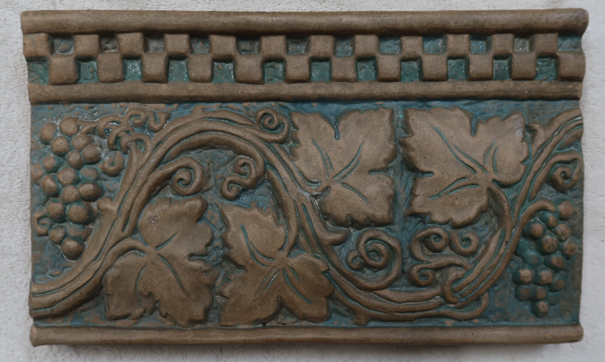
Green and Dawson started their presentation by giving history into the historical significance of these salvaged tiles as well as Silverlake Conservation’s many years of experience treating these tiles. In the early twentieth century the Art and Crafts Movement took hold in the United States, emphasizing a renewal in design, decoration, and a return to handcrafted arts as a response to the automation of the Industrial Revolution. Los Angeles had a flourishing of artisans and craftsmen during this time and handcrafted tiles were found in homes large and small, namely Batchelder Tiles and Claycraft Tiles.

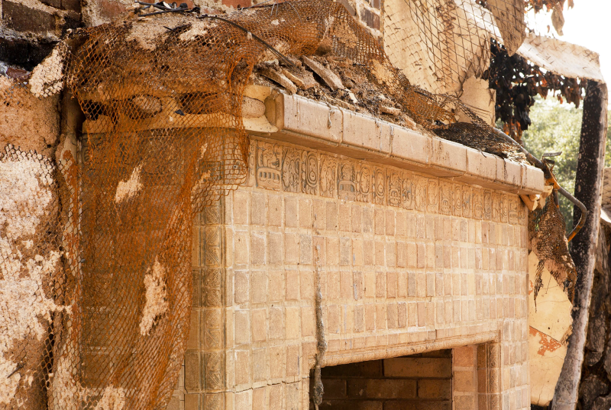
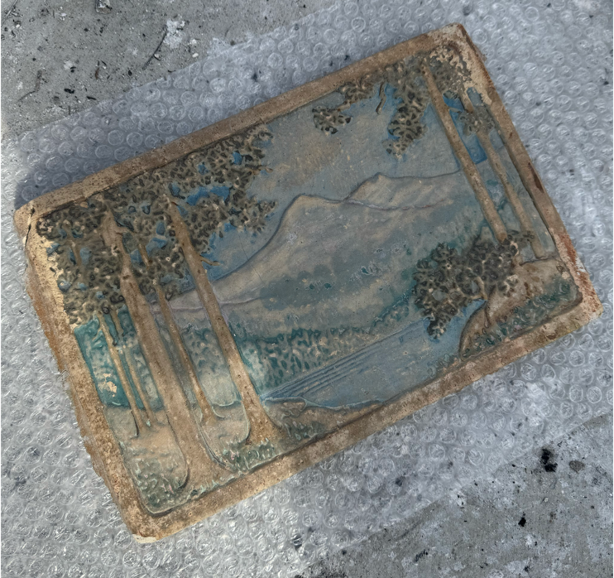

Silverlake Conservation has had twenty-five years of experience treating and cleaning historic Batchelder tiles. The presentation went over various examples, from fireplaces in single family homes to larger installations such as the Jonathan Club and The Pasadena Playhouse Fountain. From this experience they have a deep understanding of the material issues of these tiles. These range from the tiles low firing temperature, the method of attachment to the walls, and the uneven distribution of heat in older kiln models.

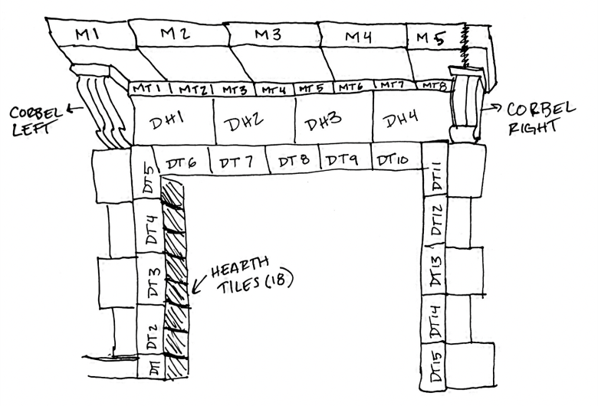
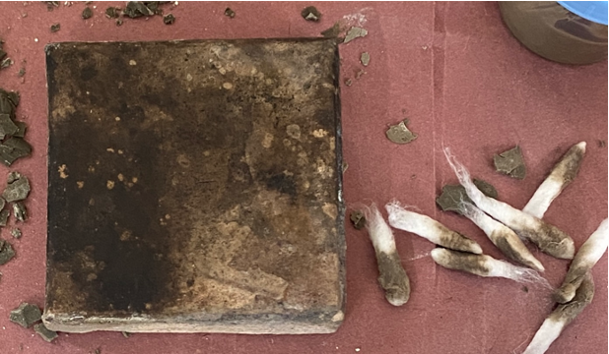

Aside from the recognized agents of deterioration that these tiles deal with normally, Green and Dawson discussed how they specifically treated tiles salvaged from the Eaton and Palisades fires. The first step is researching the historical significance and/or diagrams may exist, and mapping out the way the tiles are installed prior to removal. Secondly, the tiles salvaged from the fires were removed from their original structures and had the mortar cleaned off by stone masons. Once the tiles were transported to a studio space, Silverlake Conservation followed standard soot remediation protocols, and also dry and aqueous cleaning. A series of poultice tests were performed that helped to figure out which poultice actively worked to pull soil and oil from these tile surfaces. They found that the Mora Poultice created with bentonite clay proved most effective and pulled soot from the tile surfaces and left very little residuals on the tile surfaces.
Green and Dawson lastly discussed the ethical quandary of treating these fire damaged objects, namely, how do we treat objects that have recently gained a new "period of significance" while adhering to best practices? One of the principles of conservation is allowing an object to look its age, and this was something Green and Dawson emphasized. The tiles were cleaned and stabilized, but not forced to look brand new. This mindset allows the fire to be a new chapter to what will hopefully be a long life for these tiles.


Using pXRF To Assess the Efficacy of Three Treatments to Remove Toxic Heavy Metals from the Surface of Fire-Damaged Objects
Presentation authors: Kamila Korbela, Ruth del Fresno-Guillem and Katya Birukova
Blogpost Summary by Hannah Stahulak, Silverlake Conservation
Korbela spoke about her experiences in the aftermath of the Palisades and Eaton fires and the broad scope that a conservator can serve in the aftermath of a natural disaster. Her presentation focused on the concept of care and how conservation can be a relationship of art, people, and networks of care. While on the surface conservation work is about material preservation, there is also an emotional element behind every object and its story.
Presentation authors: Catherine Sincich and Vanessa Muros
Blogpost Summary by Hannah Stahulak, Silverlake Conservation
Catherine Sincich and Vanessa Muros gave a thoughtful presentation about their experiences and discoveries at the Altadena Library Fire Clinic after the Eaton Fire. While cleaning objects at this clinic, Sincich and Muros were curious about the known heavy metals commonly encountered after a wildfire, and how effective current conservation cleaning methods are at reducing these toxic heavy metals.
The presentation focused on five toxic heavy metals that can be exposed in objects after a wildfire; those metals being arsenic, lead, mercury, chromium, and cadmium. These metals can bioaccumulate in the body, therefore Sincich and Muros were curious to test conservation cleaning methods to see if what conservators do actually reduces the amount of heavy metals present. Sincich and Muros had six identical silverplated spoons that survived the Eaton Fire that worked as a controlled variable while testing various cleaning methods. They decided to focus on three cleaning methods: soot sponging, ultrasonic cleaning, and electrolytic reduction (E.R.). The results before and after cleaning were examined with a Portable XRF Spectrometer (pXRF) which helps to detect the presence and relative amounts of elements on the surface of an object by picking up on each element's unique wavelength. Each object was scanned before treatment with the pXRF Spectrometer and it was found that while the top five toxic heavy metals were not present, other heavy metals were.
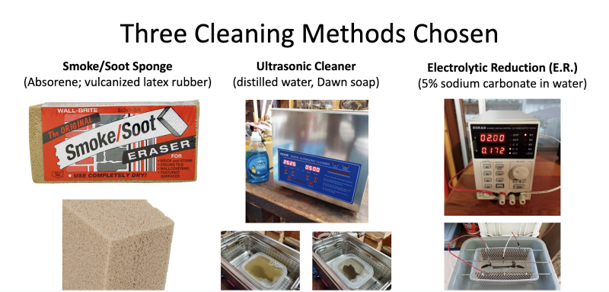
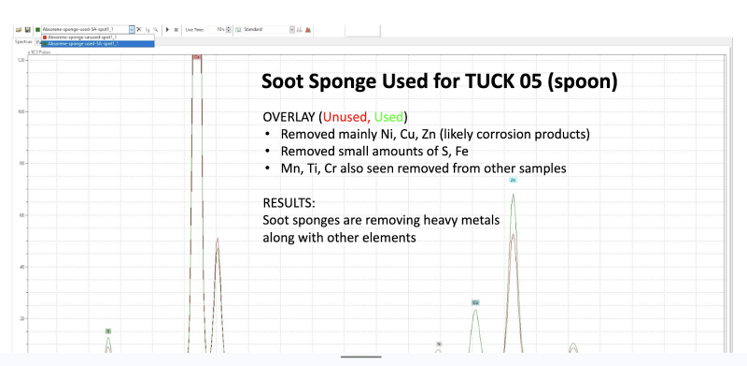
The first test performed on the spoons was dry cleaning with a soot sponge, which is made of vulcanized latex rubber. Sincich and Muros found that the soot sponges were useful in removing metals such as copper, nickel, zinc, and iron, and even picked up trace amounts of elements such as sulfur, titanium, manganese, and chromium. This proved that the sponges are effective in cleaning corrosion products off of fire damaged surfaces.
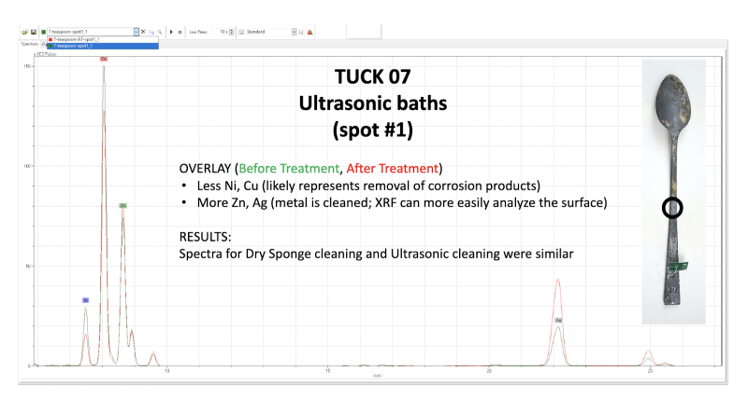
The next test was an ultrasonic bath, which lasted five minutes and used distilled water and Dawn dish soap to create the bath. After the ultrasonic bath the spoons were tested with the pXRF Spectrometer and found very similar results to the soot sponges, the bath removed corrosive metals and was therefore effective.
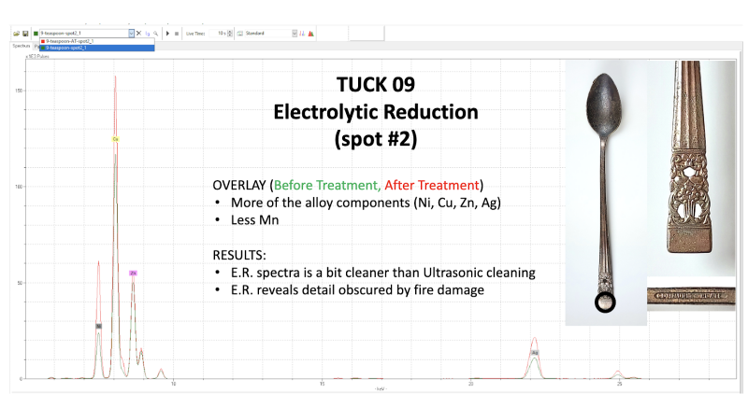
The last test performed was the Electrolytic Reduction (E.R.) which used five percent sodium carbonate in water. The pXRF Spectrometer showed us that E.R. was effective in reducing metals, especially alloy components such as nickel, copper, zinc, and silver. The E.R. cleaning also revealed details of the spoon that were covered by fire damage prior to testing.
The conclusion of these findings is that all three methods are useful in reducing heavy metals present in fire damaged objects. Soot sponges are excellent for dry cleaning and conservators can continue to use them with confidence. Ultrasonic baths are a great tool for wet cleaning. And E.R. stabilizes metal objects by reducing the oxidation state and removing unwanted substances. Sincich and Muros ended by hoping to continue this study and look at the presence and persistence of toxic heavy metals from houses that survived the wildfires versus houses that burned. I look forward to hearing their continued findings.
LA Fire Recovery. Where should the focus be? Caring Through Crisis: Conservation, Connection, and Resilience After the California Fires
Presentation authors: Kamila Korbela, Ruth del Fresno-Guillem and Katya Birukova
Blogpost Summary by Hannah Stahulak, Silverlake Conservation
Korbela spoke about her experiences in the aftermath of the Palisades and Eaton fires and the broad scope that a conservator can serve in the aftermath of a natural disaster. Her presentation focused on the concept of care and how conservation can be a relationship of art, people, and networks of care. While on the surface conservation work is about material preservation, there is also an emotional element behind every object and its story.
Presentation authors: Kamila Korbela, Ruth del Fresno-Guillem and Katya Birukova
Blogpost Summary by Hannah Stahulak, Silverlake Conservation
Korbela spoke about her experiences in the aftermath of the Palisades and Eaton fires and the broad scope that a conservator can serve in the aftermath of a natural disaster. Her presentation focused on the concept of care and how conservation can be a relationship of art, people, and networks of care. While on the surface conservation work is about material preservation, there is also an emotional element behind every object and its story.
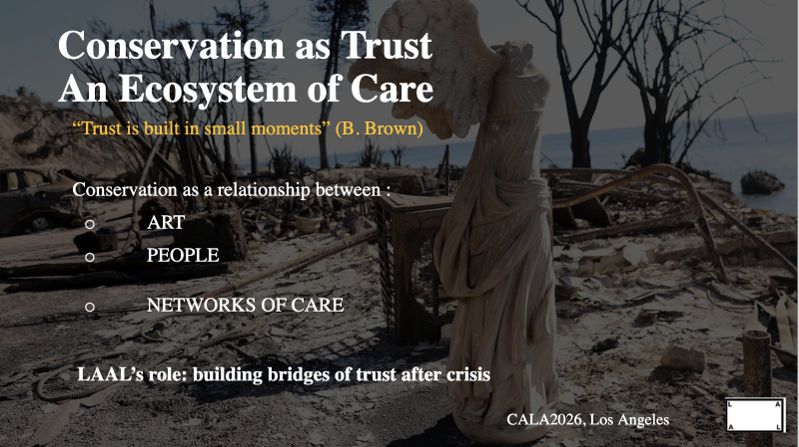
This presentation highlighted how to build an ecosystem of trust, and how trust is a foundation for work across a team of people. Korbela’s team was in close collaboration with artists, collectors, families, and institutions, all dealing with the difficult aftermath of the wild fires. Conservation became a bridge between trauma and healing for all interested parties, and new meaning and memories are embedded in these fire damaged objects.
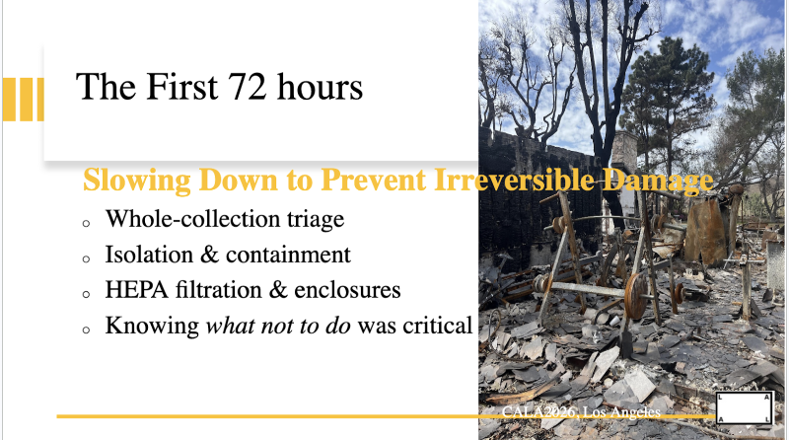
Aside from highlighting the pathos of conservation, Korbela also highlights more practical aspects of dealing with fire damaged objects. Aside from obvious signs of damage such as soot and degradation, there are also toxins and dangerous materials exposed that are not seen by the human eye. Fire is an element that can produce chemical and structural changes that go beyond surface damage. Korbela emphasized the importance of early intervention to stop irreversible damage, and having systems in place to protect the artwork as well as the conservators.
Korbela hopes that by sharing her experience she and others can contribute to a broader conversation of how empathy, collaboration, and awareness can help recovery efforts of climate driven disasters.
Where There’s Smoke, There’s Yellowed PVOH Gel
Presentation authors: Jennifer Kim and Rio Lopez
Blogpost Summary by Shannon Trono, Graduate Intern at Getty Conservation Institute 2025-2026
Jennifer Kim and Rio Lopez presented two case studies examining the treatment of metal artworks recovered from homes destroyed in the Palisades Fire. Their presentation focused on how conservation decisions were shaped by material condition, health and safety considerations, and dialogue with owners and artists, resulting in approaches tailored to each object’s circumstances.
Presentation authors: Katheryn Hernandez
Blogpost Summary by Crystal Choi
In the aftermath of the Los Angeles wildfires, several members of the conservation community have worked (and continue) to respond to fire-damaged artworks. Beyond visible burn damage, soot, and smoke residues posed serious concerns, particularly since they can contain potentially toxic heavy metals such as arsenic, lead, mercury, chromium, and cadmium. The contaminants
can embed themselves into surfaces (i.e., penetrate the skin or remain on the body) and linger long after a fire, making thorough remediation essential, especially for artworks returning to homes and living environments. As such, effectively removing soot and residual smoke odor is an important part of fire remediation. This was the central focus to Katheryn Hernandez’s presentation, Where There’s Smoke, There’s Yellowed PVOH Gel.
Hernandez’s presentation discussed the use of PVOH-Borax gel as a cleaning material for additional remediation of soot and smoke-damaged paintings. Over the past year, The Conservator’s Easel has treated numerous works affected by the LA wildfires, as well as damage from an electrical house fire. While traditional dry, aqueous, and solvent-based cleaning methods remain important first steps, they may not fully remove embedded soot particles. After Head Conservator Linnaea Saunders attended a workshop on PVOH gel, the studio began testing gel cleaning to see if it could be a potential solution for further remediation.
The team found that the best approach for thorough remediation involved an initial vacuuming and dry cleaning with soot sponges, followed by two passes of the PVOH-Borax gel. Hernandez showcased case studies during the presentation to demonstrate how effectively the gel lifted soot from paintings with varying degrees and types of fire damage.
A key strength they found in using the PVOH-Borax gel is its malleability and clarity. The gel can be rolled across a surface, introducing minimal moisture while simultaneously capturing particulate matter. Its cohesive structure reduces residue, making it especially useful on textured surfaces where aqueous methods can be less effective. Another strength is the gel’s ability to exhibit a visible color change (from clear to either yellow or black) when it absorbs soot particles. The presentation provided images of before and after the use of the gels to give further visual confirmation of this transformation. Repeated applications were also done to reduce lingering smoke odors.
Although the gel is effective in its basic form, it can be modified with solvents, surfactants, or additional gelling agents depending on treatment needs. The gels can leave small pieces of residue if left out for too long. But any small residues can be quickly lifted using a fresh piece of gel.
Overall, Hernandez’s presentation highlighted how adaptable, visually responsive materials like PVOH-Borax gel can play an important role in fire remediation. In situations where soot carries both aesthetic and health risks, having a cleaning method that’s controlled, effective, and visually responsive offers conservators a valuable tool in restoring artworks
Lessons Learned at LAAC: Fire Remediation in Private Paper Conservation
Presentation authors: Madison Brockman and Erin Jue
Blogpost Summary by Jennifer Ly
Presented by Madison Brockman, the talk covered LAAC’s experiences in undertaking recovery projects for fire-damaged works on paper as a private practice. By sharing their professional strategies and findings, they hoped to not only share practical tips with the conservation community, but also encourage collaboration and ethical frameworks to empower fellow conservators in their own response efforts.
Presentation authors: Madison Brockman and Erin Jue
Blogpost Summary by Jennifer Ly
Presented by Madison Brockman, the talk covered LAAC’s experiences in undertaking recovery projects for fire-damaged works on paper as a private practice. By sharing their professional strategies and findings, they hoped to not only share practical tips with the conservation community, but also encourage collaboration and ethical frameworks to empower fellow conservators in their own response efforts.
Brockman first emphasized the importance of an evacuation protocol, as LAAC’s lab is located right between the sites of the Palisades and Eaton fires and conservators had a firsthand look at the harrowing impact. She also noted an essential aspect of recovery work: proper PPE. While the amount may fluctuate based on the project’s needs, extra PPE must always be present as protocol dictates and a routine for donning and doffing PPE should be developed. Due to the large undertaking of the projects, the conservators also found themselves increasingly branching out their skills to act as registrars, logistics managers, etc. as they accounted for enough time and money in travel, treatment, and material costs.
As LAAC began recovery efforts, they allocated dedicated lab space for damaged objects and worked on treatments for a variety of items not classified as ‘fine art,’ but rather were valuable simply due to the fact they had survived. The main concerns for these objects were usually discoloration, frame damage, and mold, with unmounted works vacuumed and surface cleaned and frame works unframed, dry cleaned, and remounted as necessary.
As a result of this variability, Brockman highlighted how active communication with their clients was essential to professional expertise and compassionate care. She described how much emotional and psychological work was being put in, and advised conservators to respond empathetically to not only their clients, but also themselves and others in the conservation community.
A Second Act: The Revival of Fire Damaged Objects
Presentation authors: Jennifer Kim and Rio Lopez
Blogpost Summary by Shannon Trono, Graduate Intern at Getty Conservation Institute 2025-2026
Jennifer Kim and Rio Lopez presented two case studies examining the treatment of metal artworks recovered from homes destroyed in the Palisades Fire. Their presentation focused on how conservation decisions were shaped by material condition, health and safety considerations, and dialogue with owners and artists, resulting in approaches tailored to each object’s circumstances.
Presentation authors: Mayra Villegas, Abby Duckor and Chukes
Blogpost Summary by Crystal Choi
The devastating impact of the Los Angeles wildfires was deeply felt by many members of the community. Thousands of homes were destroyed, landscapes were burnt down, and many were left rebuilding their lives in the aftermath. But the consequences of these wildfires extended beyond physical damage. They left a profound impact on people’s histories, memories, and connections, with many precious memorabilia destroyed, family heirlooms lost, and artworks that carried memory and meaning damaged. What burned in these fires was not only physical, but deeply personal, and the permanence of this loss made this impact feel even heavier.
As conservators involved in fire remediation, Abby Duckor and Mayra Villegas of Fine Arts Conservation carefully considered how best to support clients who had endured such loss while determining an appropriate treatment approach. Their primary goal was to conserve the objects in a manner that ensured the conservators’ safety, stabilized the artworks for safe return to their owners, and thoughtfully addressed the damages caused by the fires. In their presentation, Duckor and Villegas illustrated this decision-making process through two case studies involving unglazed ceramics affected by the fires. The presentation also concluded with artist Michael Chukes, one of the clients involved in the case studies, sharing his personal experiences and reflections.
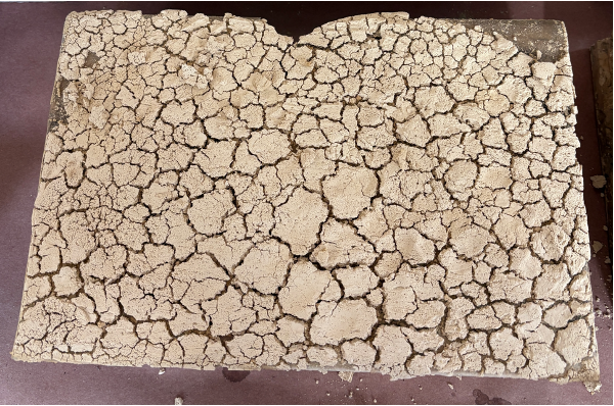
The first case study covered two sculptural pieces from Michael Chukes. The Fine Arts Conservation team had first been contacted by the ceramicist whose home studio in Altadena was severely damaged by the fires. The extreme heat caused significant alterations to many of his sculptures, resulting in severe cracking and surface discoloration. Although the two sculptures selected for treatment were structurally intact, they had undergone irreversible changes. Since Chukes patinated his ceramics in a non-traditional way, the treatment required careful consideration of his unique surface approach. The conservators began by using dry cleaning methods, which involved HEPA vacuuming, soft brushes, and soot sponges. This was then followed by consolidation of the cracks using BEVA. Some discoloration remained, but Chukes embracedthese changes as an added layer of aging to his artworks and evidence of what his sculptures had endured during the fires.
The second case study involved a Native American Wedding Vessel and a Kachina Doll, which were the only surviving objects from a client’s late father’s collection. These objects held significant emotional value for the client, as her father had made a special trek to the Mesas to purchase them directly from the artists themselves. Similar to the first case study, these objects also exhibited significant surface discolorations, in addition to fused glass shards in the surface, resulting from the extreme heat of the fire. Treatment involved an initial dry cleaning of the object and a careful mechanical removal of the fused glass. Discussions with the client were critical during the process as several of the damages on these objects were irreparable. These discussions revectored the goal of the project by shifting the focus more on stabilization than restoration. Removing all visible signs of fire damage would not be the main priority, but instead preserving the objects’ structural integrity in their altered state.
In both case studies, the conservators found a drastic shift in priorities as well as re contextualization of the objects themselves. In this recontextualization, the objects transformed from markers of loss to symbols of survival and resilience. The visible changes became part of their histories.
Duckor and Villegas reflected on lingering questions such as whether they had performed appropriate treatment for the unglazed ceramics, if it was possible to remove soot entirely from porous objects, and what the future stability of these objects would be. These case studies raised broader considerations on how conservators should navigate fire remediation in the future and where the line stands between restoration and acceptance of irreversible change.
In the final portion of their presentation, artist Michael Chukes spoke about the impact of the fires on his life and practice, and what it meant to lose both his artworks and his studio. For him, his art studio was his life, so losing that had a devastating impact on him. He described himself as both an artist and historian, with his artworks serving as a way to document his life and history. Losing his artworks to the fires meant more to him than a loss of his creations; it felt like a piece of his soul was lost in the process. As Chukes reflected on works like The Time Traveler, Tinker Toys, and A Message of Hope, he shared the memories embedded within them, including how tinker toys connected to his childhood and the joy those early experiences represented. He spoke about how his own history was embedded in these works, prompting the audience to apprehend that the loss of his artworks truly meant a loss of his own history.
Chukes’ piece of the presentation underscored the importance of preservation and what it can mean to artists like him. Creating the work, Chukes noted, is only one part of an artist’s legacy; without preservation, the stories and artwork an artist hopes to leave behind may not survive for future generations. His words served as a powerful reminder that conservation protects more than just the objects themselves; it safeguards the histories, memories, and legacies of the people behind them. In moments of disaster, conservation becomes more than just a technical practice, but a means of carrying forward the remains of each person, a society, and our shared humanity.
The Uncloaking and Destruction of a Mural at the Pasadena Jewish Temple Center
Presentation authors: Brandon Phoung, Kiernan Graves and Margalit Schindler
Blogpost Summary by Shannon Trono, Graduate Intern at Getty Conservation Institute 2025-2026
During the Eaton Fire, widespread destruction at the Pasadena Jewish Temple Center revealed an unexpected discovery: a previously unknown mural concealed beneath plaster on a surviving two-story brick wall. As much of the Center’s three buildings were lost, this lone double-brick wall—with painted surface exposed on its upper story—remained standing. Revealed unexpectedly by the fire, the mural was documented and fragments were recovered to allow for potential future study or conservation.
Presentation authors: Brandon Phoung, Kiernan Graves and Margalit Schindler
Blogpost Summary by Shannon Trono, Graduate Intern at Getty Conservation Institute 2025-2026
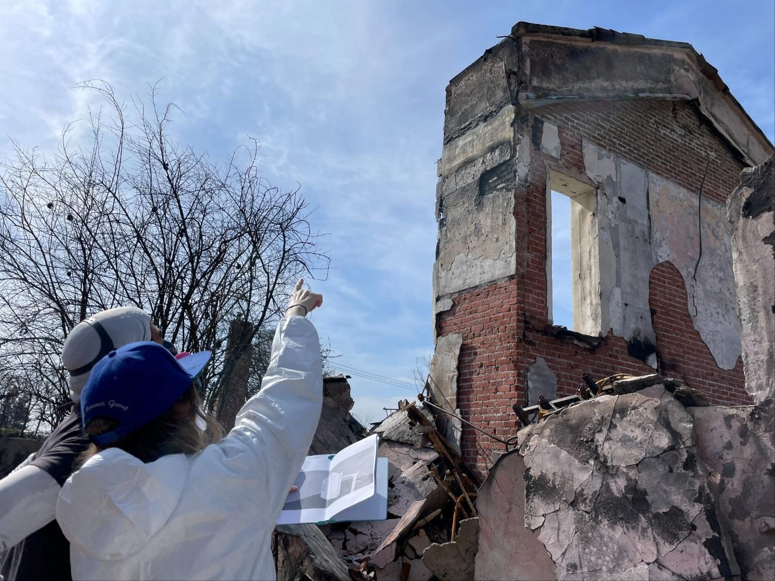
During the Eaton Fire, widespread destruction at the Pasadena Jewish Temple Center revealed an unexpected discovery: a previously unknown mural concealed beneath plaster on a surviving two-story brick wall. As much of the Center’s three buildings were lost, this lone double-brick wall—with painted surface exposed on its upper story—remained standing. Revealed unexpectedly by the fire, the mural was documented and fragments were recovered to allow for potential future study or conservation.
Brandon Phoung presented his role in the emergency stabilization effort, working alongside Kiernan Graves (Site and Studio Conservation) and Margalit Schindler (Pearl Preservation, LLC). With heavy rain forecasted and long-term decisions still pending, the immediate priorities were to record the mural and protect it from further environmental exposure. To this end, Alan White (AQYER, LLC) conducted 3D laser scanning of the wall, providing a detailed digital record of both the mural and the wall’s architectural features. This documentation informed the design of the protective enclosure and preserves a record of the mural before intervention.
Access and site conditions posed significant constraints. Surrounded by debris, the wall could only be reached via an 80-foot boom lift. With limited time and no confirmed funding, Phoung designed a low-cost, non-invasive protective enclosure using Tyvek, PET foam gasketing, sandbags, and salvaged materials. The wall’s geometry—including two returns and a gable peak—required a custom transition to create a tensioned, weather-resistant envelope. Surface preparation involved grinding down protrusions to prevent punctures, and percussive tools were avoided due to concerns about structural instability. Installation was completed in a single day, extending into darkness.
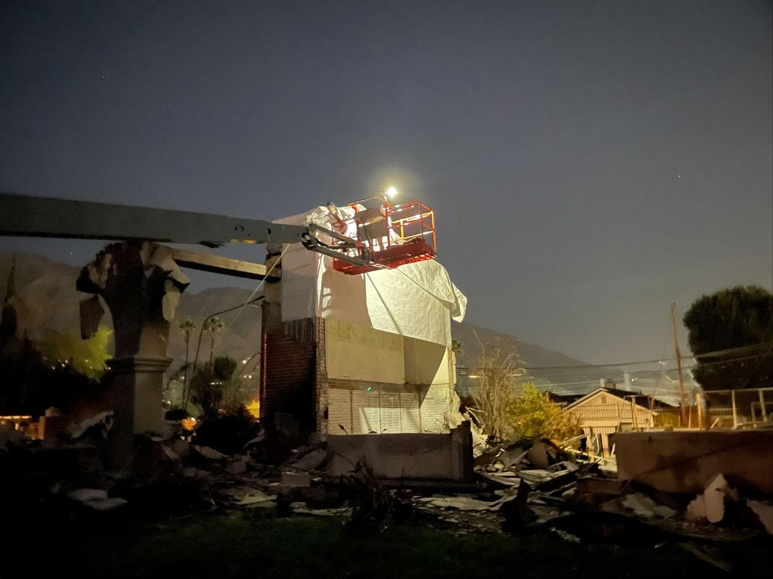
Ultimately, despite the rapid stabilization efforts, the surviving wall was scheduled for demolition as part of FEMA’s post-fire land-clearing process. The team worked quickly to recover fragments of the mural where possible, preserving them for future assessment or treatment once funding or additional support can be secured. While the mural could not be preserved in situ, this effort highlights the careful balance between emergency conservation, regulatory requirements, and planning for long-term stewardship. It stands as a testament to the ambition and creativity required to protect cultural significance in the aftermath of disaster, even when permanent preservation of the site is not feasible.
Observations and Treatments on Metals Recovered from the Palisades Fire
Presentation authors: Jennifer Kim and Rio Lopez
Blogpost Summary by Shannon Trono, Graduate Intern at Getty Conservation Institute 2025-2026
Jennifer Kim and Rio Lopez presented two case studies examining the treatment of metal artworks recovered from homes destroyed in the Palisades Fire. Their presentation focused on how conservation decisions were shaped by material condition, health and safety considerations, and dialogue with owners and artists, resulting in approaches tailored to each object’s circumstances.
Presentation authors: Jennifer Kim and Rio Lopez
Blogpost Summary by Shannon Trono, Graduate Intern at Getty Conservation Institute 2025-2026
Jennifer Kim and Rio Lopez presented two case studies examining the treatment of metal artworks recovered from homes destroyed in the Palisades Fire. Their presentation focused on how conservation decisions were shaped by material condition, health and safety considerations, and dialogue with owners and artists, resulting in approaches tailored to each object’s circumstances.
The first case study addressed Torso in Space, a cast bronze sculpture by Alexander Archipenko. Recovered from rubble, the sculpture was entirely encased in a thick black-and-white oxidized layer. As one of only a few items salvaged from the home, it carried significant emotional weight, and the owner requested that it be returned as closely as possible to its pre-fire appearance. Examination revealed that, despite extensive surface alteration, the underlying metal remained largely intact. Treatment emphasized aesthetic reintegration while acknowledging the object’s recent history. The oxidized layer was reduced in controlled phases using increasing concentrations of phosphoric acid, with a decision made not to remove it entirely. Following cleaning, the surface was chemically repatinated using cupric and ferric nitrates, followed by a sulfur-based layer and a final wax coating.
The second case involved a steel maquette for The Walkers by Wang Luyan, originally developed as the study model for a group of ten sculptures permanently installed at Whittier College in 2019. Constructed from welded sheet metal components, the maquette exhibited severe corrosion, delamination, deformation, and structural instability following fire exposure. In preparing the treatment, the team consulted the artist through the homeowner, whose friends helped establish contact.