
LA Fire Recovery. Where should the focus be? Caring Through Crisis: Conservation, Connection, and Resilience After the California Fires
Presentation authors: Kamila Korbela, Ruth del Fresno-Guillem and Katya Birukova
Blogpost Summary by Hannah Stahulak, Silverlake Conservation
Korbela spoke about her experiences in the aftermath of the Palisades and Eaton fires and the broad scope that a conservator can serve in the aftermath of a natural disaster. Her presentation focused on the concept of care and how conservation can be a relationship of art, people, and networks of care. While on the surface conservation work is about material preservation, there is also an emotional element behind every object and its story.
This presentation highlighted how to build an ecosystem of trust, and how trust is a foundation for work across a team of people. Korbela’s team was in close collaboration with artists, collectors, families, and institutions, all dealing with the difficult aftermath of the wild fires. Conservation became a bridge between trauma and healing for all interested parties, and new meaning and memories are embedded in these fire damaged objects.
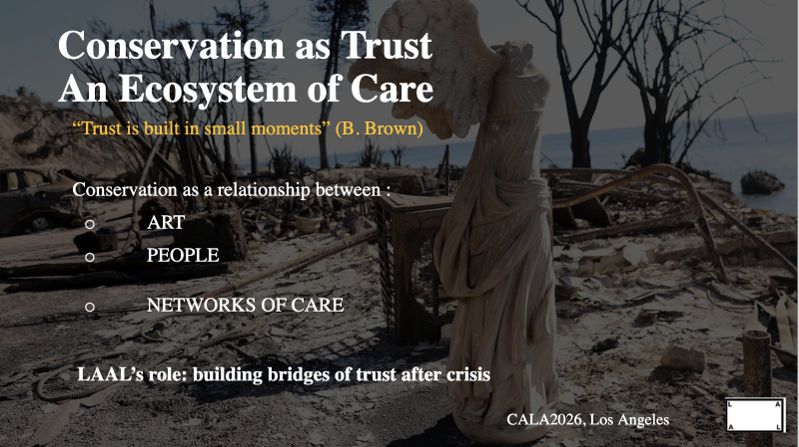
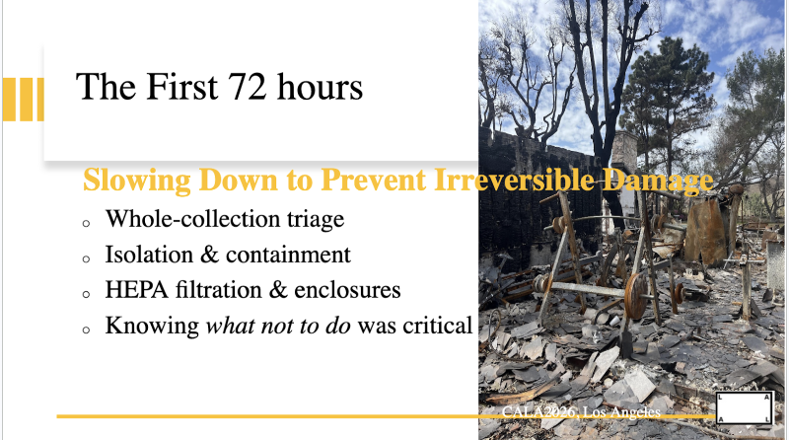
Aside from highlighting the pathos of conservation, Korbela also highlights more practical aspects of dealing with fire damaged objects. Aside from obvious signs of damage such as soot and degradation, there are also toxins and dangerous materials exposed that are not seen by the human eye. Fire is an element that can produce chemical and structural changes that go beyond surface damage. Korbela emphasized the importance of early intervention to stop irreversible damage, and having systems in place to protect the artwork as well as the conservators.
Korbela hopes that by sharing her experience she and others can contribute to a broader conversation of how empathy, collaboration, and awareness can help recovery efforts of climate driven disasters.